Mosques in Bangkok: seven historic mosques and how to visit them
Canal-side Thonburi, Banglamphu, Charoen Krung and Sathorn, with the manners to know.
On this page
Bangkok has more than 180 mosques, and some of the oldest stand on the city’s canals and riverbanks, built by communities that came from Persia, Pattani, Java and the Arab world. This guide to seven historic mosques in Bangkok covers the canal-side cluster in Thonburi, Chakraphong Mosque in Banglamphu, Haroon Mosque off Charoen Krung, Bang O Mosque on the river and Jawa Mosque in Sathorn. All are working places of worship, so the etiquette section at the end matters as much as the addresses.
Mosques in Bangkok at a glance
| Mosque | Area | Dates | Good to know |
|---|---|---|---|
| Ton Son | Bangkok Yai, Thonburi | Founded 1688 | Often called the oldest mosque in Bangkok |
| Bang Luang (Kudi Khao) | Thonburi | c. 1784-1786 | White, Thai-style brick building |
| Kudi Charoenphat | Bangkok Yai, Thonburi | Completed 1785 | Shia mosque in a wooden fretwork style |
| Chakraphong | Banglamphu, Phra Nakhon | Community from the late 18th century | Three-storey yellow building |
| Haroon | Bang Rak | Present building 1934 | Near Charoen Krung Soi 36 |
| Bang O | Bang Phlat, Thonburi | Building listed as 1918 | Riverside, near MRT Bang O |
| Jawa | Sathorn | Founded 1906 | Centre of the Javanese-descended community |
None of the seven mosques posts official visiting hours, and travel listings disagree, so confirm times with each mosque before going.
The canal-side mosques of Thonburi
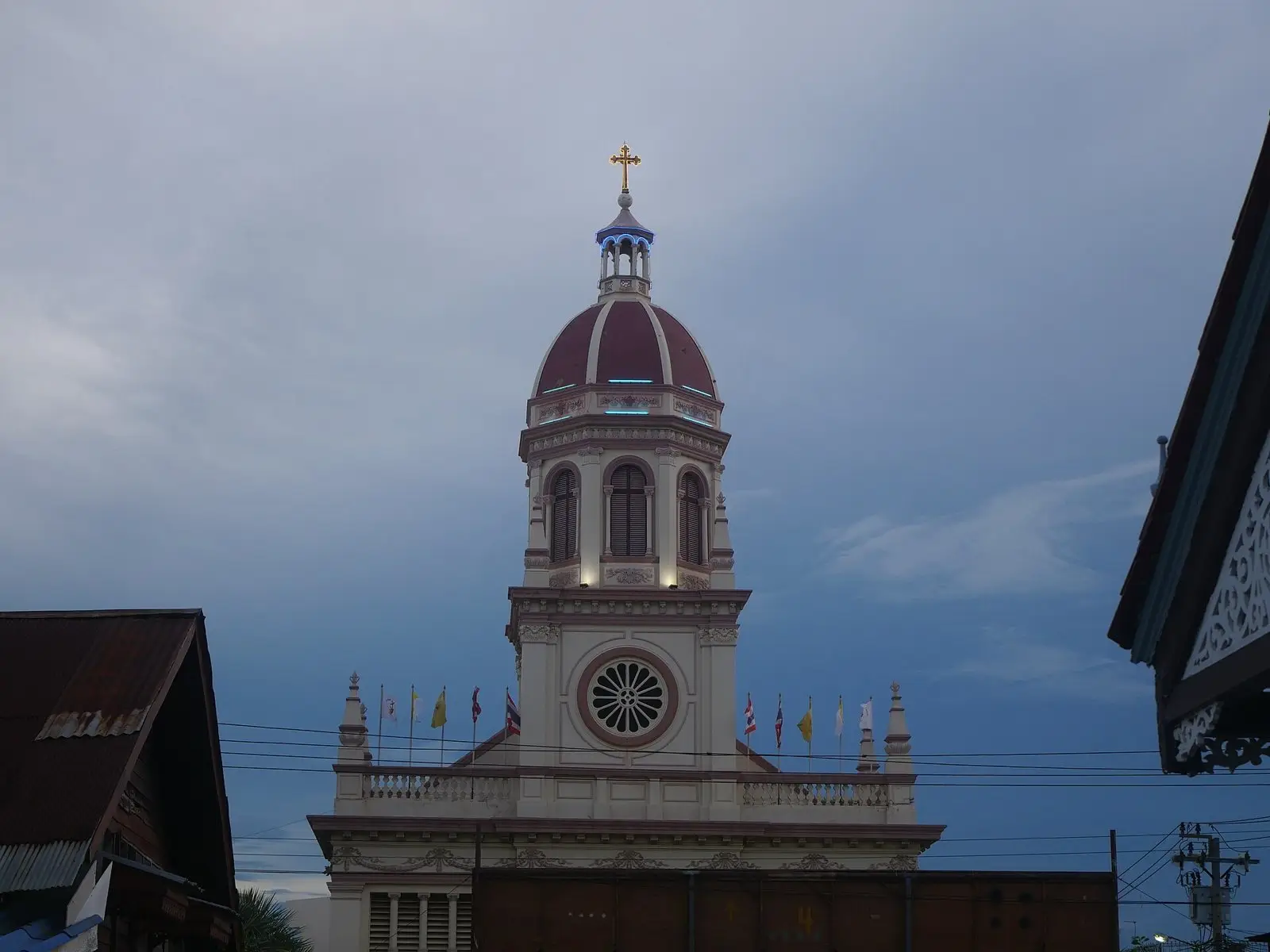
Three of the oldest mosques in Bangkok sit within a short walk of each other along Khlong Bangkok Yai, once called Khlong Bang Luang, near where the canal meets the Chao Phraya. The nearest MRT station is Itsaraphap, and the area pairs well with our Kudi Chin walking guide, since Santa Cruz Church and the Kian Un Keng shrine are close by.
Ton Son Mosque
Ton Son, “the pine tree mosque”, is on the left bank of Khlong Bangkok Yai in Wat Arun subdistrict. It was founded in 1688, in the Ayutthaya period, and is considered the oldest mosque in Bangkok and in Thailand. Its first name was Kudi Yai; the name Ton Son comes from the twin pine trees planted in front of its wall.
The first building was a teak house on a raised platform with a tiled roof, later rebuilt in brick. The present reinforced-concrete mosque dates from 1952, when the older structure could no longer be repaired. Inside, the minbar carries large panels of Arabic calligraphy, and a cemetery lies outside the building.
Bang Luang Mosque (Kudi Khao)
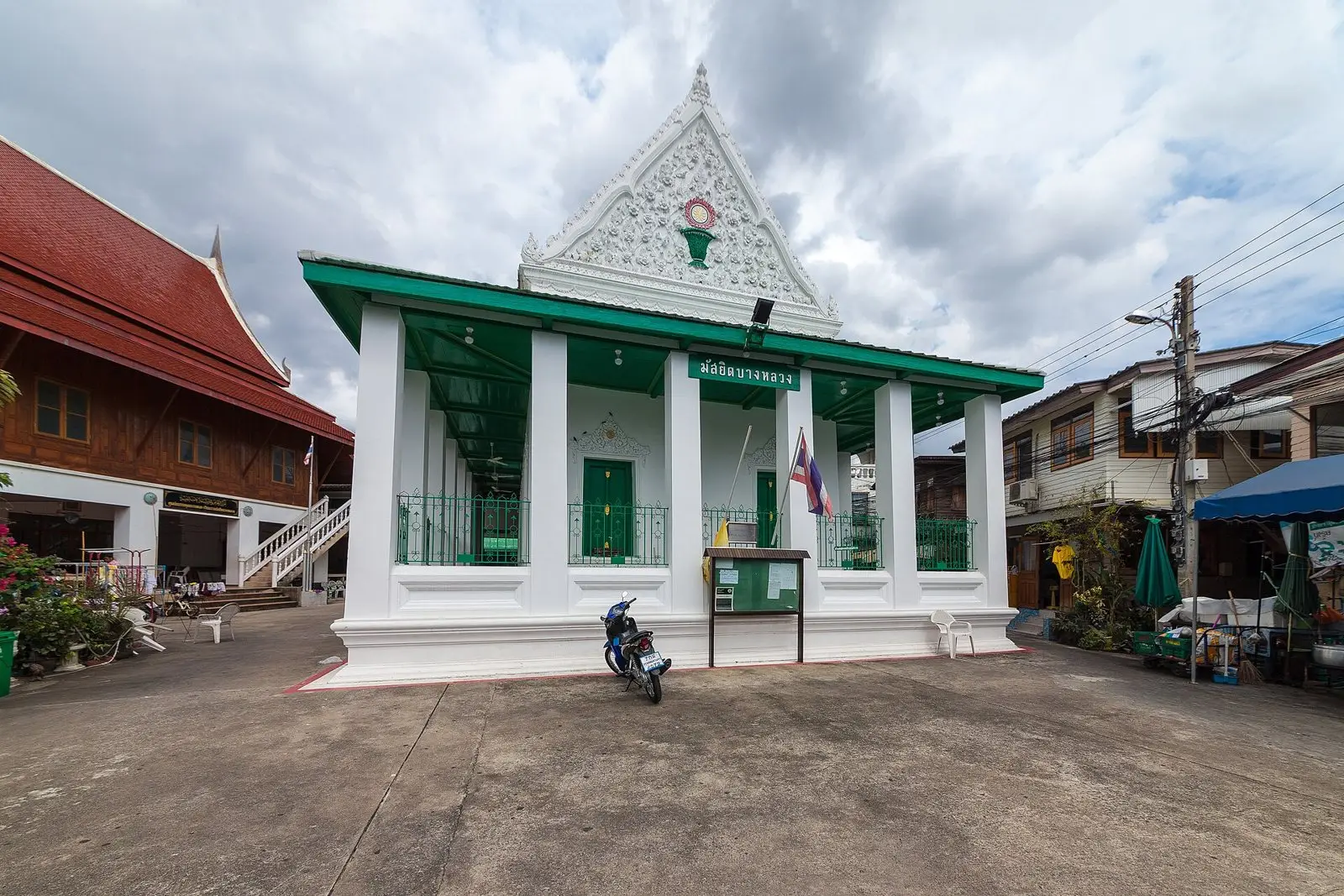
Directly across the canal, at 151 Soi Arun Amarin 7 in Thon Buri district, Bang Luang Mosque looks at first like a small Thai temple hall. A Muslim merchant named To Yi built it between about 1784 and 1786, in Thai brick painted white, which gave it the names Kudi Khao, “the white cloister”, and Kudi To Yi.
The building is about 24 metres long and 12 metres wide, with no dome, and it mixes Thai, Chinese and European decoration. It is widely described as the only mosque in Thailand built in traditional Thai style. Tombs stand in front of it.
Kudi Charoenphat
A little further along, on Itsaraphap Road by Charoenphat Bridge, Kudi Charoenphat serves a Shia community, the Chao Sen, whose families have lived in this quarter for generations. The mosque was completed in 1785 and is known for its gingerbread-style wooden fretwork. It was once called Kudi Lang, “the lower mosque”, and took its present name when the bridge was built.
The community holds a religious ceremony at the mosque each year during the month of Muharram. Visitors should check with the mosque before coming at that time.
Chakraphong Mosque, Banglamphu
Chakraphong Mosque, at 70 Trok Surao Chakraphong off Chakrabongse Road in Chana Songkhram, is the oldest mosque in the old inner city on the Bangkok bank. Its community traces its roots to Muslim families from Pattani who settled in Banglamphu in the late 18th century, and many of them were goldsmiths.
It was first known as Surao Tong Pu and later took the name of the road. The original wooden mosque has been replaced by a three-storey yellow building. It sits a few minutes’ walk from Khao San Road; our Banglamphu guide covers the rest of the neighbourhood.
Haroon Mosque, Bang Rak
Haroon Mosque stands at 25 Charoen Krung Road, reached from Soi Charoen Krung 36, in one of Bangkok’s oldest Muslim communities. It is named after Haroon Bafadel, son of the trader Musa Bafadel, who settled in Bangkok in the early 19th century.
The first mosque was a wooden building on the riverbank. When a customs house was built at the pier in the late 19th century, the community moved a few hundred metres inland, and the present two-storey brick building went up in 1934, with European-style details and wooden shutters.
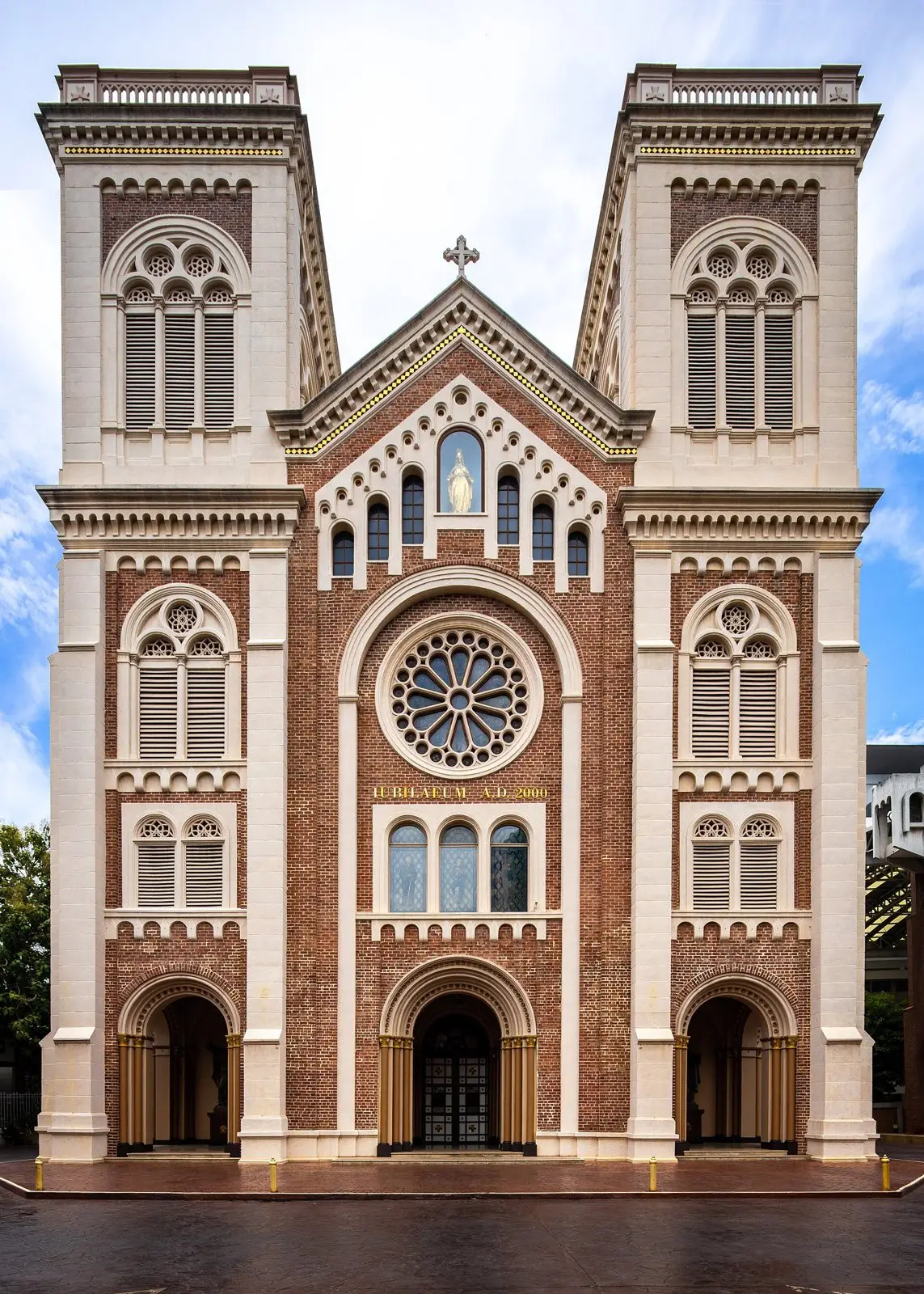
Thai PBS World puts it about 15 minutes’ walk from Saphan Taksin BTS station. The neighbourhood also has Assumption Cathedral, which is covered in our guide to churches in Bangkok.
Bang O Mosque, Bang Phlat
Bang O Mosque is on Soi Charan Sanitwong 86, on the Thonburi bank north of the old town, and faces the Chao Phraya. Bang O’s Muslim community traces its ancestry to Persia in the Ayutthaya period, and in the 19th century many families worked in the timber trade and lived on rafts on the river. The current mosque building is listed as built in 1918.
MRT Bang O station on Charan Sanitwong Road is the nearest stop. Visiting hours are to be confirmed with the mosque.
Jawa Mosque, Sathorn
Jawa Mosque, founded in 1906, is the centre of the Thai Muslim community of Javanese descent in the Kampung Jawa area of Sathorn district. Its architecture has been studied for its Javanese style. Address details and visiting hours are to be confirmed with the mosque.
Visiting a mosque in Bangkok: etiquette
- Dress modestly, with arms and legs covered. Women may be asked to cover their hair inside the prayer hall, so carry a scarf.
- Take off your shoes before entering the prayer hall, and keep your voice low.
- Avoid the five daily prayer times, and above all Friday midday prayers, unless you have come to pray. Ask before taking photos of people.
- These are community mosques, not museums. Ask at the office or a caretaker before going inside, and arrange group visits in advance.
For food in the same neighbourhoods, see our halal food guide. For the city’s Buddhist sites, read our temples in Bangkok guide, and the Thonburi mosques can be reached on a canal boat tour. More neighbourhood and heritage guides are in our culture section.
Sources
- Wikipedia: Ton Son Mosque, Khlong Bangkok Yai, founded 1688, rebuilt in concrete in 1952
- Wikipedia: Bang Luang Mosque (Kudi Khao), 151 Soi Arun Amarin 7, built c. 1784-1786, Thai-style brick building
- Wikipedia: Kudi Charoenphat, Shia mosque on Itsaraphap Road, completed 1785
- Wikipedia: Chakraphong Mosque, 70 Trok Surao Chakraphong, Chana Songkhram, Phra Nakhon
- Wikipedia: Haroon Mosque, Bang Rak, moved inland for the Customs House, present building 1934
- Time Out Bangkok: Haroon Mosque Community, 25 Charoen Krung Road, Bang Rak
- Thai PBS World: Of faith and flavours, Haroon Mosque on Soi Charoen Krung 36, 15 minutes' walk from Saphan Taksin BTS
- Wikipedia: Jawa Mosque, Kampung Jawa, Sathorn, founded 1906
- Wikipedia: List of mosques in Thailand, 187 mosques in Bangkok (March 2022), Bang O Mosque 1918
- Wikipedia: Bang O, Bang Phlat, a Muslim community of Persian descent and riverside raft houses