Gibbon Rehabilitation Project Phuket: visits, volunteering and rules
Booked learning sessions at a rescue centre in Phuket's last rainforest
On this page
The Gibbon Rehabilitation Project is a rescue and release centre for gibbons beside Bang Pae Waterfall in Thalang, in the north of Phuket. It is run by the Wild Animal Rescue Foundation of Thailand (WARF) and is not a zoo: visitors come only on booked learning sessions, and there is no contact with the animals. This guide covers session times, the longer morning programme, volunteering, the house rules and how to get there, as listed on 18 November 2026.
At a glance
| Gibbon Rehabilitation Project | |
|---|---|
| Where | 104/3 Moo 3, Pa Khlok, Thalang, Phuket 83110, at Bang Pae Waterfall |
| Run by | Wild Animal Rescue Foundation of Thailand (WARF) |
| One-hour sessions | 10:30-11:30, 12:30-13:30 and 14:00-15:00, booked online |
| 2.5-hour programme | 09:30-12:00, from ฿4,500 per guest, ages 4 and up, up to 10 guests |
| Walk-ins | Not accepted; every visit is booked in advance |
| Animal contact | None |
| Contact | grp@gibbonproject.org, +66 88 590 9714 (phone and WhatsApp) |
| Booking | gibbonproject.org |
Why there is a gibbon project in Phuket
The project’s own history starts in the early 1980s, when its founders found a six-month-old gibbon chained to a pole in Bangkok. They kept rescuing gibbons and other wildlife at their own cost, and in 1992 the group became the Wild Animal Rescue Foundation of Thailand, which then set up the Gibbon Rehabilitation Project, according to its story page.
Gibbons had been taken from Phuket’s forests for the tourist trade, for visitors who wanted to hold, pet and photograph them, until none were found alive in the wild there. The project’s first releases, onto five small islands around Phuket, did not work. It later released its first gibbon family into the island’s last remaining rainforest, and it now runs a second release site at Baan Pang Champee in Chiang Mai.
Gibbons in Phuket’s last rainforest
The release site is the Khao Phra Thaew Non-Hunting Area, a forested ridge running north to south through Thalang, with peaks up to 450 m. The project calls it the last tropical rainforest on the island and the main source of Phuket’s water; it feeds the Bang Pae, Ton Sai and Para waterfalls. The area is under the Department of National Parks, Wildlife and Plant Conservation.
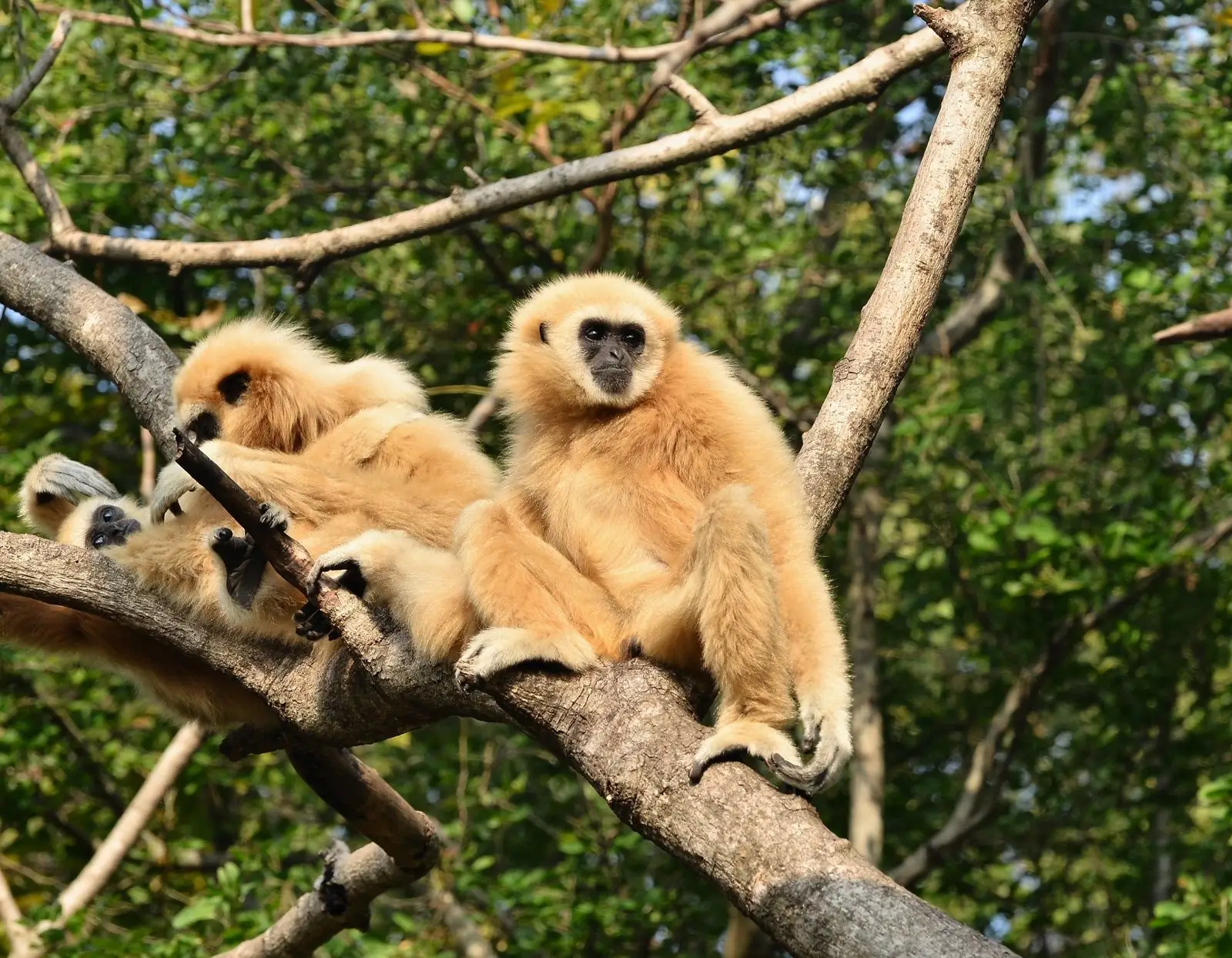
Four gibbon species are found in Thailand: the white-handed gibbon, the pileated gibbon, the agile gibbon and the siamang. They live in small families of a mated pair and their young, and the pair sings a duet that carries a long way through the forest. All four are listed on CITES Appendix I, the project notes, and the main threats are the tourist and pet trades, habitat loss and poaching.
Visiting: sessions and the 2.5-hour programme
Every visit is a scheduled learning session, and the booking page says walk-ins are not allowed. The one-hour session runs three times a day, at 10:30, 12:30 and 14:00, and is booked through the project’s online shop; a Russian-language session is also offered. The price of the one-hour session is to be announced on the project’s own pages; the online shop shows it at checkout.
The longer “Save gibbons and save forests” programme runs from 09:30 to 12:00 and is booked through Airbnb Experiences, from ฿4,500 per guest. It is open to guests aged 4 and up, with up to 10 per group, and free cancellation up to one day before. The listing describes a talk on the project’s research, making nutrition balls, feeding the gibbons through a pulley system, and recording their calls and movements.
For a date outside the schedule, or a group, email grp@gibbonproject.org. Thai public schools can visit free of charge; private schools are asked to run a fundraising campaign for the project first.
House rules for visitors
The project stresses that it is a rehabilitation and conservation centre, not an animal-contact attraction. Its responsible visitor guide asks people:
- not to buy gibbons or anything made from them;
- not to pose for photos with baby gibbons taken from the wild;
- to support rainforest conservation by avoiding products linked to forest loss;
- to report wildlife trading or poaching to the Department of National Parks.
Volunteering with gibbons in Thailand
The project takes two kinds of volunteers, for a minimum of two weeks and a maximum of six, according to its volunteer page. Docents greet visitors, lead the one-hour sessions and help with school groups, for a non-refundable ฿3,500 registration fee.
Wildlife volunteers help with daily care, food preparation, enclosure cleaning and reforestation, for a flat ฿7,000: the ฿3,500 registration fee plus ฿3,500 for training and supervision. Both fees cover orientation, a park access pass and a T-shirt. The project does not provide housing, food, transport or visa help. Applicants send the application form to grp@gibbonproject.org or visit the education centre.
For more places that take volunteers, see our guide to volunteering with animals near Bangkok.
Getting there
The centre shares its site with Bang Pae Waterfall in the Khao Phra Thaew forest, in Pa Khlok sub-district of Thalang. The project does not publish transport directions, so plan the trip by road and ask about any park entry fee when you book.
The project fits well into a family trip to the island: our Phuket with kids guide pairs it with a swim at Bang Pae and other stops nearby. For gibbons in the wild closer to Bangkok, see the Khao Yai wildlife watching guide, and for more animal stories, the Animals section.
Sources
- Gibbon Rehabilitation Project: book a visit, session times, address and contact
- Airbnb Experiences: Save gibbons and save forests, the 2.5-hour programme hosted by a WARF volunteer
- Gibbon Rehabilitation Project: volunteer and docent programmes, fees and how to apply
- Gibbon Rehabilitation Project: school and group visits
- Gibbon Rehabilitation Project: our story, WARF and the project's history
- Gibbon Rehabilitation Project: the Phuket release site in Khao Phra Thaew
- Gibbon Rehabilitation Project: about gibbons, species in Thailand and threats
- Gibbon Rehabilitation Project: how to be a responsible visitor
Related stories