Mangrove forests near Bangkok: boardwalks, wildlife and firefly boats
Coastal walks within two hours of the city, and where fireflies light up at night.
On this page
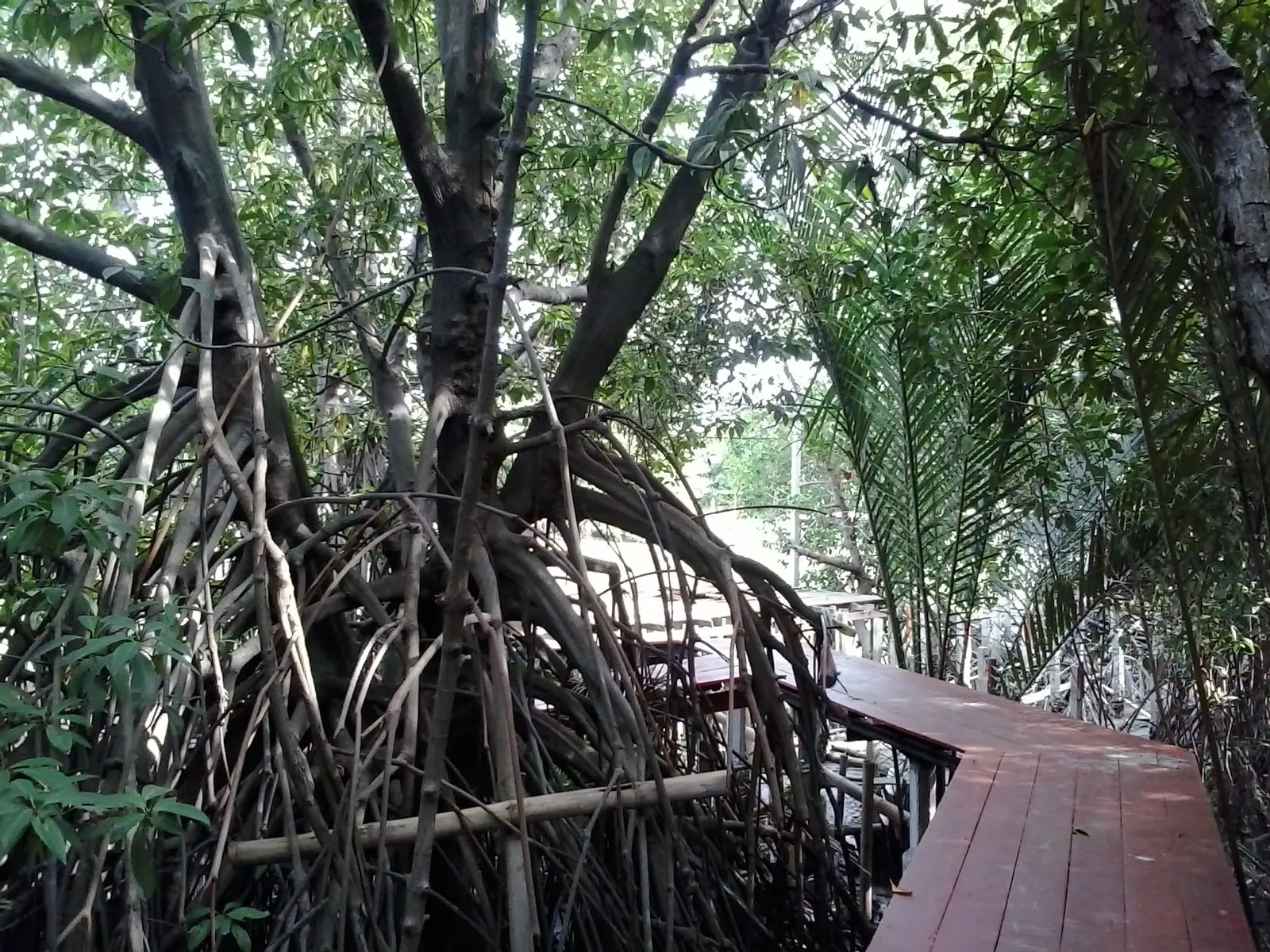
The mangrove forests near Bangkok line the top of the Gulf of Thailand, from Bangkok’s own short coast at Bang Khun Thian to Samut Prakan, Samut Sakhon and Samut Songkhram. Most can be reached in an hour or two, and several have boardwalks where you can watch crabs, mudskippers and shorebirds without getting muddy. After dark, boats at Amphawa and on Bang Krachao take visitors to see fireflies gathering in the trees along the water.
At a glance
| Place | What you see | Hours | Fee | Getting there |
|---|---|---|---|---|
| Bang Khun Thian, Bangkok | Replanted mangroves, Rak Thale bridge | – | – | Car or taxi |
| Bang Pu, Samut Prakan | Mangrove reserve, gulls November to April | 05.30-19.00 daily | Free | BTS Kheha, then songthaew, taxi or Grab |
| Mahachai, Samut Sakhon | Boardwalk through mangroves, shorebirds | 08.30-16.30 | Free | Car via Rama II Road, or train to Mahachai |
| Khlong Khon, Samut Songkhram | Replanted forest, boat trips, planting | Ask the centre | Ask the centre | Car, about two hours |
| Amphawa, Samut Songkhram | Firefly boats | 18.30 and 19.40 trips | To be confirmed when booking | Car, minivan or train |
| Bang Krachao, Samut Prakan | Fireflies in a protected grove | Evenings, by arrangement | To be confirmed when booking | Ferry from Wat Bang Na Pier |
When to go
Mangroves can be visited all year, but the cool season from November to April is the busiest time for birds. The Tourism Authority of Thailand (TAT) says gulls gather at Bang Pu from November to the end of April, and the thaibirding.com guide to Mahachai puts the best shorebird months at October to April, at low tide.
Fireflies follow a different calendar. Sawasdee, the Thai Airways magazine, names the rainy season from May to October as the best time at Amphawa, at high tide, when boats can come close to the trees. Go on a dark, moonless evening if you can.
Bang Khun Thian: Bangkok’s own coast
Bang Khun Thian is the only district of Bangkok that touches the sea, and the Bangkok Metropolitan Administration (BMA) has been replanting mangroves along it. Post Today reported in September 2020 that 220 rai had been planted, with 176,000 seedlings.
That month the BMA opened the Rak Thale bridge, a 116-metre concrete walkway across Khlong Phitthayalongkon that gives the public a way into the mangroves to study them. Without a rail link, it is a trip by car or taxi.
Bang Pu, Samut Prakan
The Bang Pu Recreation Center at 164 Mu 2, Sukhumvit Road, is best known for its winter gulls, which our birdwatching in Bangkok guide covers. Behind the seafront, the Bang Pu Nature Education Centre is where TAT says visitors can learn about mangroves.
The reserve protects one of the last remnant patches of mangrove in the Gulf of Thailand, inside a Royal Thai Army recreation centre. It was developed with WWF-Thailand as the country’s first urban nature education centre, according to a 2012 paper in the Natural History Bulletin of the Siam Society. On World Wetlands Day in February 2026 it was recognised as Thailand’s 16th Ramsar Site, a wetland of international importance, IUCN reported.
TAT lists the grounds as open daily from 05.30 to 19.00, with free entry. Take the BTS Sukhumvit Line to Kheha, the end of the line, then a songthaew, taxi or Grab.
Mahachai, Samut Sakhon
On the west side of the Tha Chin river mouth, the West Mahachai mangroves are a government mangrove learning centre in Bang Ya Phraek, Mueang Samut Sakhon. TrueID Travel lists it as open from 08.30 to 16.30, with a boardwalk through the forest and mangrove planting for visitors.
The thaibirding.com guide says the concrete boardwalk was rebuilt and is raised with no handrails, so keep a close eye on children. It lists mangrove whistlers, collared kingfishers and wintering sandpipers, whimbrels and godwits, and says there is no charge to go birding. Facilities are limited: bring water and food, and expect mosquitoes.
Drive along Rama II Road and cross the Tha Chin, or take the train from Wongwian Yai to Mahachai and find local transport from there.
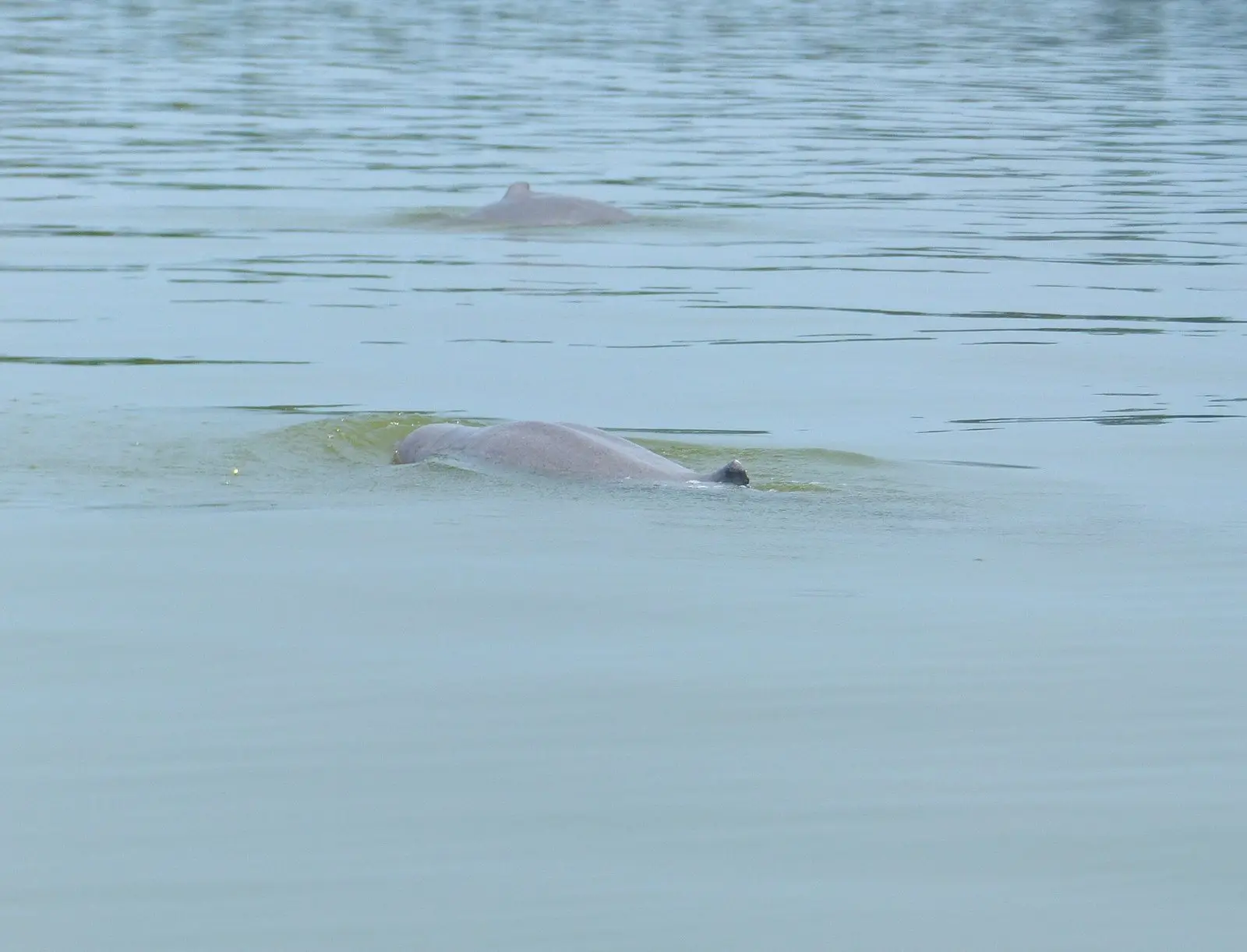
The Red Boardwalk Bridge. Further along the Samut Sakhon coast, a 700-metre red boardwalk built in 2014 runs between the mangroves and the open sea. The Nation reported in 2023 that Irrawaddy dolphins visit the area from November to January, and it is about an hour’s drive from Bangkok.
Khlong Khon, Samut Songkhram
The Khlong Khon Mangrove Forest Conservation Center is in Khlong Khon subdistrict, Mueang Samut Songkhram, and TAT gives its number as 062 265 5356. The community here replanted mangroves cleared for shrimp farms: The Nation reported that the forest had grown back from about 1,000 rai to about 6,000 rai.
Visitors can plant mangrove saplings, take a boat out to see mudskippers, crabs and oyster farms, and eat at a hut over the water. Wear clothes that dry quickly and bring a hat, sunscreen and a change of clothes, because planting means mud. Ask the centre for boat and planting fees when you call.
Khlong Khon is about two hours’ drive from Bangkok, which makes it easy to combine with an evening at Amphawa.
Firefly boat trips at Amphawa
Amphawa’s district government began promoting firefly tourism in 2004, The Scientist reported, when thousands of fireflies gathered in the mangrove trees along the Mae Klong. Sawasdee says the boats now visit canals lined with lamphu trees, where the fireflies settle.
A community pier at Wat Amphawan sells two firefly trips a night through the TAGTHAi app, from 18.30 to 19.30 and from 19.40 to 20.40; book or cancel at least 48 hours ahead. Our Amphawa with kids guide has the floating market, getting there and places to stay.
Fireflies on Bang Krachao
Bang Krachao, the green river loop across the Chao Phraya from Khlong Toei, has five firefly species, TAT Newsroom reported. Lumpoo Bangkasob, a local conservation project led by Sukij Plubchang, looks after a protected grove of 41 rai beside Khlong Lad Bang Yor, according to Coconuts Bangkok.
Coconuts says fireflies can be seen there every night of the year, most of all on humid, moonless evenings near the end of the rainy season. Visits are arranged through the project’s Facebook page, in Thai. Take the ferry from Wat Bang Na Pier, then a motorcycle taxi to the end of Soi Phet Chaheung 20; our Bang Krachao with kids guide covers the ferries and bike hire for a daytime visit.
Watching wildlife without disturbing it
Light is the biggest problem for fireflies. Researchers led by Tufts University, with Kasetsart University’s Anchana Thancharoen, wrote in 2021 that firefly sites should cut light pollution, because torches and phone screens disrupt courtship. Keep your phone dark and the flash off, and do not shine a light at the trees.
The same study found that heavy motorboat traffic had eroded riverbanks where firefly larvae live, and that visitors trample habitat. Chiang Mai CityLife reported that at Amphawa, noise from tour boats led some residents to cut down the lamphu trees. Choose a quiet boat, keep voices low, and leave the fireflies on the trees: do not try to catch or touch them.
In the mangroves, stay on the boardwalks, leave crabs and mudskippers alone, and take your rubbish home.
More nature days out
For more animals in and around the city, see our guide to where to see animals in Bangkok, or browse the Animals section.
Sources
- Post Today: BMA opens the Rak Thale bridge into the Bang Khun Thian mangroves (September 2020, Thai)
- Tourism Authority of Thailand: Bang Pu Recreation Center, hours, free entry, gulls and the nature education centre
- Natural History Bulletin of the Siam Society: Bang Pu, Thailand's first urban nature education centre (2012)
- IUCN: World Wetlands Day 2026, Bang Pu recognised as Thailand's 16th Ramsar Site
- Theo Courant: Bang Pu, walkways, free entry and getting there by BTS (June 2026)
- thaibirding.com: Mahachai mangroves, boardwalk and getting there (updated March 2026)
- TrueID Travel: West Mahachai mangroves, boardwalk, planting and hours (Thai)
- The Nation: Samut Sakhon's Red Boardwalk Bridge and Irrawaddy dolphins (April 2023)
- Tourism Authority of Thailand: Khlong Khon Mangrove Forest Conservation Center, location and contact
- The Nation: Khlong Khon's replanted mangroves and activities (August 2012)
- Sawasdee (Thai Airways): Amphawa fireflies, lamphu trees and the best season (March 2024)
- TAT Newsroom: Samut Songkhram by minivan, bus or train from Bangkok (August 2020)
- TAGTHAi: Amphawa community pier, firefly boat trip times and booking rule
- The Scientist: Firefly tourism sparks calls for sustainable practices (June 2021)
- Coconuts Bangkok: a firefly safari on Bang Krachao with Lumpoo Bangkasob (March 2021)
- TAT Newsroom: Bang Krachao eco-tourism, five firefly species and the Khlong Toei ferry (March 2017)
- ScienceDaily (Tufts University): firefly tourism study in Conservation Science and Practice (March 2021)
- Chiang Mai CityLife: a light in the night, Thailand's fireflies and Amphawa (April 2014)