Sustainable fashion in Bangkok: natural dyes, upcycling, local cotton
Indigo from Sakon Nakhon, cotton from Loei and clothes made from factory offcuts
On this page
Sustainable fashion in Bangkok is mostly sold by small Thai labels, online or from studios, rather than in big flagship stores. Below are five labels whose own sites describe natural dyes, hand-spun and handwoven cotton, recycled fibre or upcycled garments, plus the mall floors in Bangkok that gather eco brands. Every claim is the label’s own, attributed to it.
Our other fashion guides cover different ground: second-hand shops in the vintage shopping guide, silk and the peacock marks in the Thai silk guide, and handbag makers, including Pipatchara, in Thai bag brands.
Sustainable Thai labels at a glance
| Label | What the label says it does | Where to buy | Prices |
|---|---|---|---|
| Folkcharm | Hand-spun, handwoven natural cotton from Loei; plant dyes | Studio on Ramkhamhaeng Road, by appointment; online | On its online shop |
| Philip Huang | Plant-based dyes and handwoven indigo cotton from Sakon Nakhon | Prachoom Chang space, Wed-Sat 13.00-18.00 or by appointment; online | On its online shop |
| CIRCULAR | Clothes from 100% recycled textile waste, no bleaching or dyeing | Online; pop-ups | 300 to 1,580 baht |
| Moreloop | Surplus fabric from garment factories, sold by the kilo or yard | Online | From 55 baht a yard |
| I LOVE DIY by Panida | Upcycled, handmade streetwear | Online | 6,800 to 12,500 baht |
Natural dyes and handwoven cotton
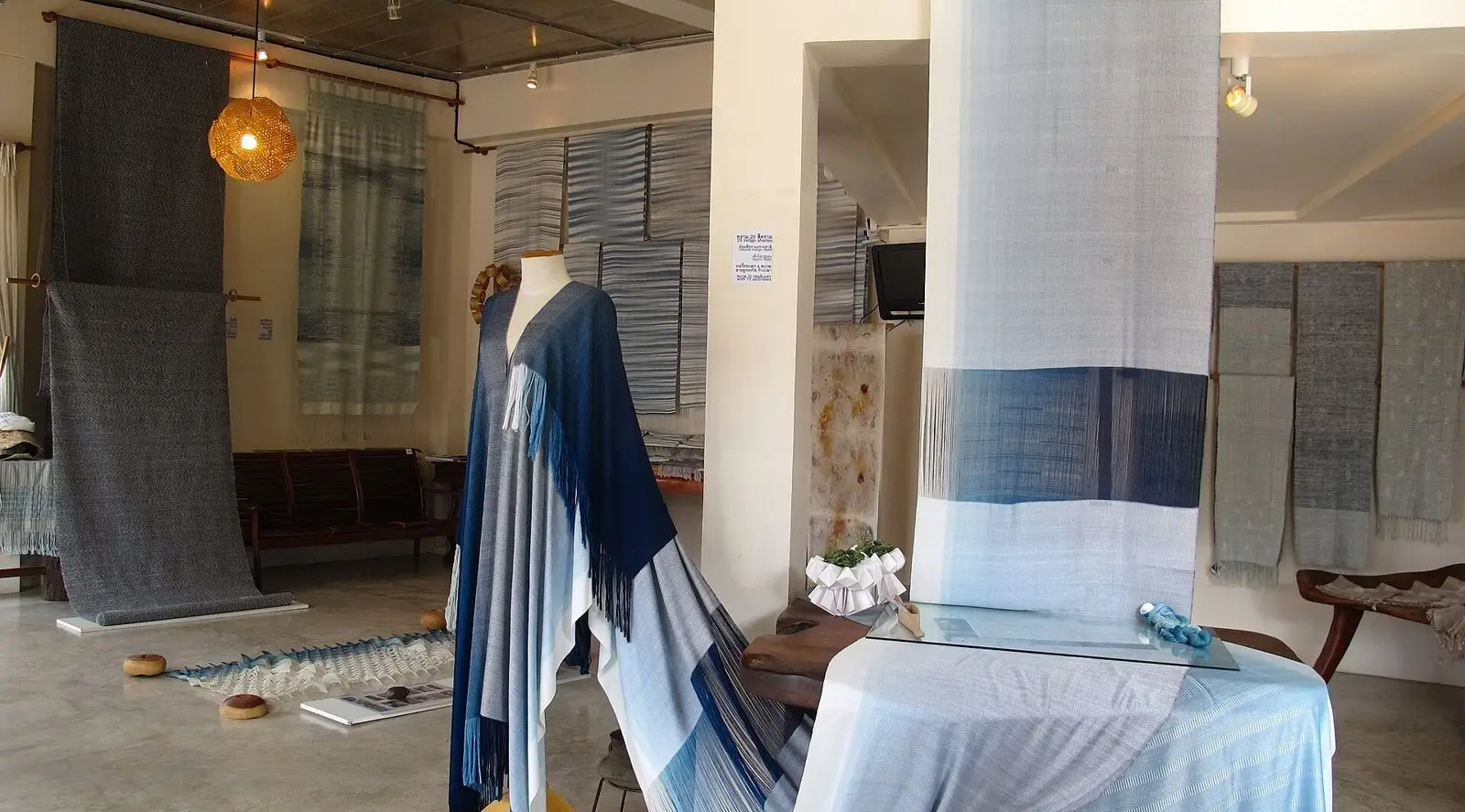
Folkcharm. Founded by Passawee T. Kodaka, Folkcharm began as a social enterprise project in 2014 and was registered as a company in 2016. The label describes its clothes, scarves and accessories as “100% hand-woven natural cotton”, using what it calls chemical-free, hand-spun cotton grown in Thailand. It says it has grown more than 15,000 kg of rain-fed cotton since 2016.
The label names the people behind each step. In Loei province, about ten women in two villages of Phu Luang district grow white and brown cotton and spin it by hand, alongside the Khun Loei Community Enterprise. The Lum Nam Huay Natural Cotton Weaving Group, about 30 weavers in four villages of Wang Saphung district, weaves it, and tailors in Bangkok sew the pieces.
For colour, Folkcharm lists local plant dyes: “Buak” indigo, ebony seeds, betel nuts, annatto, bark and leaves. It says even small offcuts are used, and that 200 kg of them have been turned back into clothing.
Visiting Folkcharm. The studio, under 50 square metres, is in Muban Suan Son, Soi 10, Ramkhamhaeng Road. It opens Monday to Friday, 10.30 to 17.00, except holidays, and the label asks visitors to email hello@folkcharm.com a day or two ahead; weekend visits can be arranged in advance. Workshops at the studio cover weaving on mini looms and natural indigo dyeing with shibori tie-dye, for children and adults; ask the studio for fees.
Philip Huang. Philip Huang and Chomwan Weeraworawit founded the label in Brooklyn in 2016, and it runs labs in Brooklyn and Bangkok. It says it uses “plant-based natural dyes, organic fibers, hand-made textiles”, working with indigo dyers and weavers in Sakon Nakhon in north-east Thailand. Hand-woven Sakon Nakhon indigo-dyed cotton is protected as a Geographical Indication, the label notes.
In Bangkok, the label works with the Fatima Self-help Center, whose makers do hand embroidery, macramé and crochet. Its site lists soft-opening hours for “Philip Huang at Prachoom Chang”, Wednesday to Saturday, 13.00 to 18.00, or by appointment. In an interview with Saloni, co-founder Chomwan Weeraworawit Huang described Prachoom Chang as a former newspaper-printing factory in Si Phraya, with the label’s first store, an indigo dyeing lab and a workshop space; contact the label for the exact address before visiting.
Recycled and upcycled fabric
CIRCULAR. This label from Samut Prakan, just south of Bangkok, makes T-shirts, polos, hoodies, shorts and dresses from what it says is 100% recycled textile waste: yarn waste from weaving mills, factory offcuts and old clothes. The waste is sorted by shade and spun into new fabric, so the label says its clothes go through “no bleaching or dyeing”. Its fabric comes from its partner SC GRAND, a textile recycler.
CIRCULAR says it is the first Thai fashion brand to be certified as a B Corp. Prices on its online shop run from 300 to 1,580 baht. It sells online and at pop-ups, and lists clothing collection points at PTG petrol stations.
Moreloop. Moreloop calls itself “a one-stop service solution dedicated to maximizing the value of surplus fabrics”. Its online marketplace sells leftover fabric from garment factories to designers, small labels and home sewers, sorted into natural, synthetic and mixed fibres. Examples on its site include cotton double-face at 305 baht a kilo and mesh at 55 baht a yard; it also takes upcycling orders through a form.
I LOVE DIY by Panida. The label describes itself as “upcycled & handmade fashion from Bangkok”. Its online store sells tops, skirts, track pants, outerwear and bags, many of them one-off pieces that sell out. Listed prices run from 6,800 baht for a backless ruffle sweatshirt to 12,500 baht for a moto sports top.
Where to buy sustainable fashion in Bangkok
NEXTOPIA at Siam Paragon. Siam Paragon opened NEXTOPIA on its 5th and 5A floors on 27 November 2025, a space of more than 15,000 square metres. It includes ECOTOPIA, an eco-product store with sections for upcycled and zero-waste goods. The mall group’s ONESIAM guide lists fashion labels on the 5th floor such as Nudi & the Whale, which makes swimwear from REPREVE recycled fabric, and Brave Shoes, which uses vegan leather made from banana peel, lime and pineapple waste with recycled rubber soles. Siam Paragon is at BTS Siam.
ICONCRAFT at ICONSIAM. On the 4th and 5th floors of ICONSIAM, ICONCRAFT sells Thai textiles that range, in the mall’s words, from “traditional weaving techniques to easy-to-wear contemporary designs”. Our Thai silk guide explains the silk marks to look for there.
Studios and online shops. Folkcharm’s studio is the one place on this list where you can see the cloth and take a dyeing class. Philip Huang’s Prachoom Chang space is open on set afternoons. CIRCULAR, Moreloop and I LOVE DIY by Panida sell mainly through their online shops.
Reading the labels’ claims
Before buying, a few questions help: what the fibre is, where it was spun and woven, which dyes were used, and who sewed it. The labels above answer these on their own sites; ask in store when a tag does not.
Some claims rest on outside schemes. CIRCULAR names its B Corp certification, and Philip Huang names the Geographical Indication for Sakon Nakhon indigo cotton; both can be looked up with the bodies that issue them.
For Thai labels known for design rather than materials, see the Bangkok fashion guide. The shopping malls guide covers opening hours and tourist cards, and more guides are in the fashion section.
Sources
- Folkcharm: Home (handwoven natural cotton, artisans, online shop)
- Folkcharm: Philosophy (founder, natural dyes, offcuts)
- Folkcharm: Artisans (Loei cotton and weaving groups)
- Folkcharm: Experience Folkcharm (studio visits, workshops)
- Folkcharm: Thai page (studio location and hours)
- Philip Huang: Home (Prachoom Chang opening hours)
- Philip Huang: About
- Philip Huang: Community (Sakon Nakhon dyers and weavers)
- Saloni: Interview with Chomwan Weeraworawit Huang (Prachoom Chang, Si Phraya)
- CIRCULAR: Our story (recycled textile waste, no dyeing)
- CIRCULAR: Online shop (products and prices)
- Moreloop: Surplus fabric marketplace and upcycling
- I LOVE DIY by Panida: Online store
- Nation Thailand: NEXTOPIA at Siam Paragon (27 November 2025)
- ONESIAM: Sustainable brands at Siam Paragon
- ONESIAM: Thai crafts and ICONCRAFT