Bringing a pet to Thailand: import permit, vaccines and fees
Apply seven working days ahead, or queue for a permit on arrival.
On this page
Bringing a pet to Thailand means getting an import permit from the Department of Livestock Development (DLD), showing the right vaccination records and an official health certificate, and passing a document check at the Animal Quarantine Station when you land. This guide follows the rules the DLD’s station at Suvarnabhumi Airport publishes for dogs and cats, and the fees in the DLD’s own manuals.
Live animals and animal products may not be brought into, out of or through Thailand without a permit, under the Animal Epidemics Act B.E. 2558 (2015). Suvarnabhumi Airport lists the penalty as up to two years in prison, a fine of up to 200,000 baht, or both.
At a glance
- Who issues the permit: the DLD, through the Animal Quarantine Station at the airport where you arrive
- Apply: at least 7 working days before arrival, by email or the DLD’s e-Movement system; a permit on arrival is possible for pets flying in the cabin or as checked baggage
- Permit valid: 60 days from issue
- Vaccines, dogs: rabies, distemper, hepatitis, parvovirus and leptospirosis
- Vaccines, cats: rabies and feline panleukopenia
- Fees on arrival: 500 baht per dog or cat and 10 baht per application, as published by the DLD
- Suvarnabhumi import email: qsap_bkk_import@dld.go.th; phone +66 2 134 0731
Three ways to bring a dog to Thailand
The Suvarnabhumi station sorts arrivals into three cases. Pets sent as manifested air cargo need a permit in advance. Pets travelling in the cabin or as checked baggage can either get a permit in advance or apply on arrival.
Both advance routes have the same deadline: the documents must reach the station at least 7 working days before arrival. If you are later than that, the station sends you to the on-arrival route. It does not recommend that route for passengers with short transit times, and processing takes longer when several pets arrive at once.
Applying for the Thailand pet import permit
For an advance permit, send these as a PDF to qsap_bkk_import@dld.go.th, one PDF per animal:
- the DLD application form R1/1
- a copy of the owner’s passport (for cargo, the importer’s)
- a photo of the pet with its face clearly shown
- a vaccination record in English with the pet’s breed, sex, date of birth, colour and microchip number, and the vet’s full name, licence number and signature
The station says it emails the permit within 7 working days, and longer if anything is missing. The permit is valid for 60 days, and a changed flight within that time does not need a new one. The DLD’s manual adds that the permit can be cancelled if an animal disease breaks out in the country of origin.
Vaccines, microchip and the health certificate
Dogs and cats must carry a microchip or tattoo, and the vaccination record must show the microchip number. A first vaccination, or one given after a lapse, must be at least 21 days old on the day of departure. A pet whose boosters are up to date does not have to wait, but its earlier records go in with the application.
A first rabies vaccine counts only if the animal was at least 12 weeks old when it was given. A dog without a valid leptospirosis vaccine needs a negative leptospirosis test taken within 30 days before departure.
Before you fly, the veterinary authority in the country you are leaving issues an official health certificate. The station requires it to be endorsed and stamped by that government, and to be legible, accurate and complete. The DLD manual says a certificate in another language needs a translation into Thai or English, signed by the translator. Ask the station how close to departure the certificate must be issued.
On arrival at Suvarnabhumi
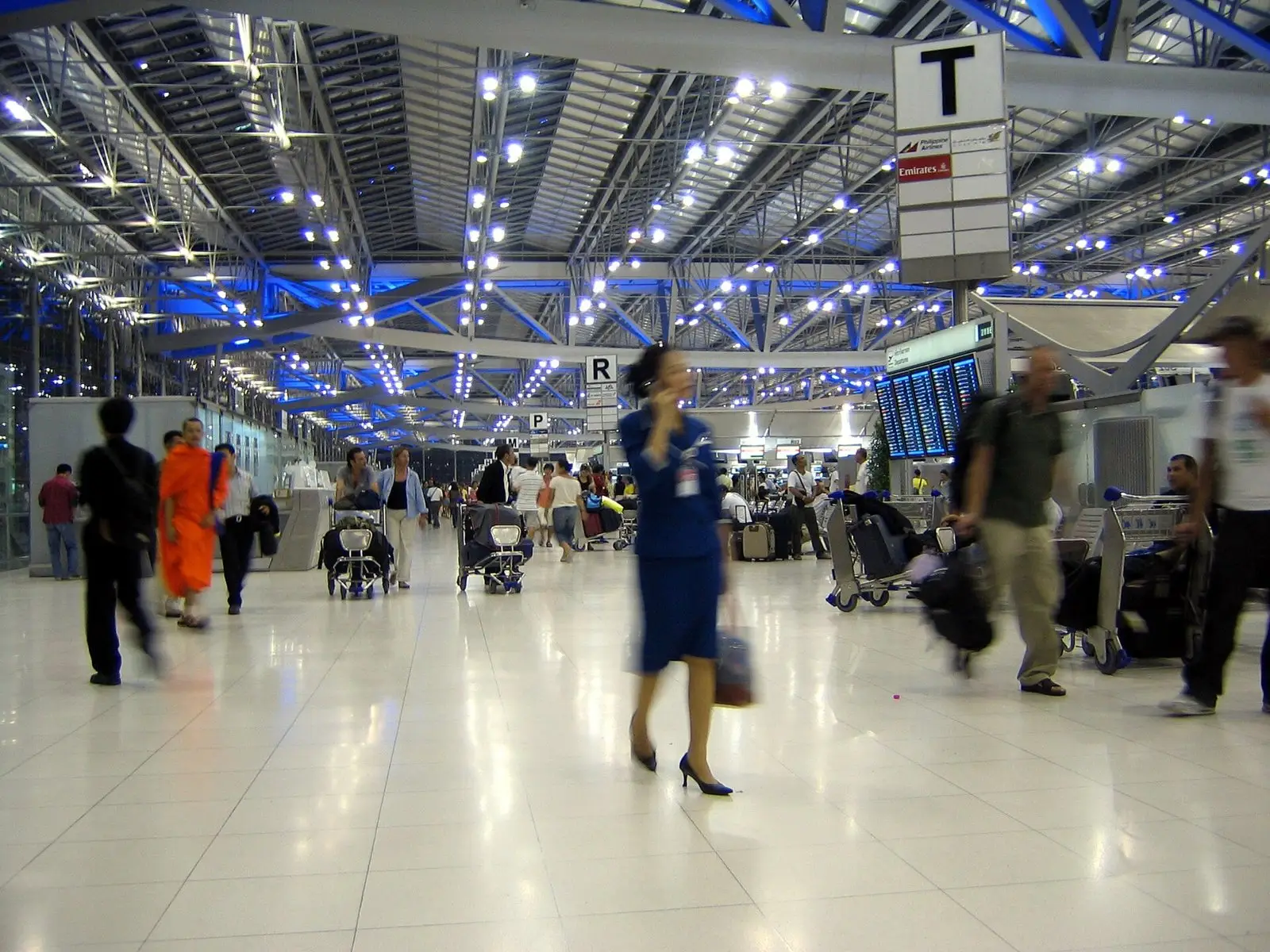
The quarantine declaration office is in the passenger terminal in front of baggage claim 8; the station’s main office is in the CE-1 building in the airport’s Free Zone. Staff check the documents and that the microchip matches the papers. If everything is in order, the station says the animal is released on the day it arrives.
The fee is 500 baht per pet plus 10 baht per shipment, and you get a receipt. These are the same rates the DLD manual lists: 500 baht per dog or cat for the import licence and 10 baht for the application. A pet that does not meet the requirements can be returned to the country it came from at the owner’s expense, and the owner can be fined.
Phuket and Chiang Mai airports have their own quarantine stations. Check with the station at your arrival airport, because the documents above come from the Suvarnabhumi station.
Airline rules: Thai Airways as an example
The airline decides how your pet flies, and each sets its own rules. On Thai Airways, pets are generally not allowed in the cabin; trained service dogs at least 6 months old can fly in the cabin free of charge, with proof of training and 48 hours’ notice.
Thai Airways carries dogs and cats as checked baggage (AVIH) when they are older than 4 months on international flights. The fee from 2 March 2026 is 11,120 baht up to 32 kg including the container, and 18,765 baht from 32 to 70 kg. The request must be completed at least 3 working days ahead, and you should be at check-in 2 hours before departure.
The airline does not take pets as checked baggage on its A320s, on flights to Auckland, Denpasar, Dubai or Hong Kong, or to and from Australian cities. It also lists 34 dog breeds it will not accept as checked baggage, among them pugs, French and English bulldogs, Shih Tzus and Pekinese. Other airlines’ rules differ: read your airline’s own pet page before you book.
Leaving Thailand with your pet
Taking a dog or cat out needs a DLD export permit, applied for through the station at your departure airport. The DLD lists the export licence at 250 baht per dog or cat plus 10 baht for the application. The destination country’s own rules apply on top.
Inside Suvarnabhumi, animals are now only allowed in the terminal if they are flying; see our story on the Suvarnabhumi Airport pets rules. Once you have landed, our guides to pet-friendly hotels in Bangkok and dog-friendly Bangkok cover where to stay and go. More is in the animals section.
Sources
- DLD Suvarnabhumi Airport Animal Quarantine Station: importation of dogs and cats
- DLD Suvarnabhumi Animal Quarantine Station: pet in cabin or checked baggage, permit in advance (PDF)
- DLD Suvarnabhumi Animal Quarantine Station: pet in cabin or checked baggage, permit on arrival (PDF)
- DLD Suvarnabhumi Animal Quarantine Station: pets as manifested cargo (PDF)
- Department of Livestock Development: citizen's manual, import notification (R.6) (Thai, PDF)
- Department of Livestock Development: citizen's manual, import licence (R.7) and fees (Thai, PDF)
- Department of Livestock Development: citizen's manual, export licence and fees (Thai, PDF)
- Suvarnabhumi Airport: Animal Quarantine Station
- Thai Airways: pets as checked baggage (AVIH)
- Thai Airways: pets in cabin and service dogs